














Who Really Chooses Your University Course?
Every year, thousands of Ugandan students sit at kitchen tables, in school offices and internet cafés, believing they are boldly choosing their future. They tick boxes on PUJAB forms, explore online portals, and list their “dream” programs. On the surface, it looks like full freedom of choice.


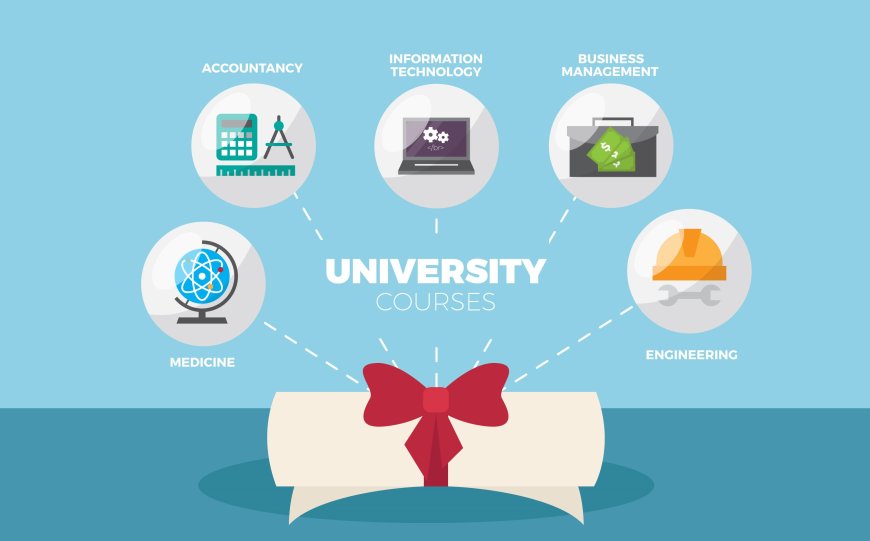
But step behind the scenes and a different story emerges. Exam scores, subject combinations, cut‑off points, parents’ wishes, university marketing, and labour‑market myths silently steer those decisions. If Uganda is serious about preparing young people for the jobs of the future, we must confront a hard question: who really chooses a student’s programme—and who should?

The illusion of free choice
For many learners, the journey begins long before Senior Six, at the point when they select subject combinations in S.3 and S.5. A single decision—choosing HEG instead of PCB, or MEG instead of PEM—opens some doors and quietly closes others. Yet most 16‑year‑olds make these choices with minimal exposure to how the world of work is changing.
By the time they reach the application stage, exam results and subject combinations have already narrowed their options. A student who once dreamt of medicine or engineering may find that their performance now points them towards nursing, statistics, social sciences or business. The student still “chooses”, but only from a menu defined by earlier decisions and an examination system they didn’t design.
Add to that the complexity of weightings and cut‑off points. Many students, especially from rural and under‑resourced schools, have never had a proper briefing on how these cut‑offs work, or which programmes are realistically within reach. The form looks like freedom; the process feels like a lottery.
Where institutions quietly take over
Universities and other higher‑education institutions are not neutral actors in this story. They operate within financial pressures, limited facilities, and regulatory frameworks. In some cases, institutions have quietly decided students’ majors for them—placing government‑sponsored or scholarship students where the institution needs numbers, rather than where the learner’s strengths lie.
There is also the subtle influence of branding. Public universities, especially Makerere, occupy an almost mythical status in the minds of many families. Being “at Makerere” can matter more than what you study there. Private universities compete through flexible payment plans, aggressive marketing, and niche programmes. In this environment, programme choice is not just about passion and aptitude; it is about institutional positioning and survival.
When where you study becomes more important than what you study, the student’s long‑term fit with a programme can easily be sacrificed.
Parents, price and prestige
No discussion of programme selection in Uganda is complete without mentioning parents and guardians. In many families, the conversation about courses is actually a conversation about prestige and perceived security: medicine, law, engineering, business administration. These are seen as “serious” programmes, promising respectable careers and social status.
Yet the reality is more complex. Some of the most demanding programmes in our universities are not the ones that get the loudest praise in living rooms. A rigorous arts or education degree, combined with digital skills, can be just as demanding—and sometimes more versatile in an evolving labour market—than a traditional business course.
Cost adds another layer. Families often negotiate programme choice around what they can afford: whether government sponsorship is likely, whether the fees at a private university are manageable, whether the programme requires expensive materials or long unpaid internships. These pressures are real, and they cannot be wished away.
The result is that many students end up pursuing the course that fits the family budget and prestige expectations, rather than the one that fits their unique abilities and future opportunities.
The jobs of the future: what’s changing
Globally and locally, several trends are reshaping the world of work:
• Automation and artificial intelligence are transforming routine jobs, both blue‑collar and white‑collar.
• Digital skills, data literacy, and the ability to work across disciplines are becoming core requirements rather than “extras”.
• Health, education, agriculture and environmental sectors are being re‑engineered through technology, demanding professionals who can blend technical skills with human‑centered thinking.
• Soft skills—communication, problem‑solving, teamwork, adaptability—are increasingly valued alongside academic qualifications.
The jobs of the future will probably not be neatly labeled “doctor”, “lawyer”, “teacher” in the way we know them today. They will be hybrid roles: ed‑tech specialist, agritech entrepreneur, health‑data analyst, digital marketer for social impact, environmental policy technologist. These roles cut across faculties and require flexible, interdisciplinary training.
If we continue to steer our young people into narrow silos based only on old prestige patterns or single‑discipline thinking, we risk producing graduates who struggle to fit into an economy that has already moved on.
What should be the “right thing”?
So, if we truly want Ugandan students to land the jobs of the future, what should we be doing differently in programme selection?
1. Put the student back at the centre
The student must be the primary decision‑maker about the programme they pursue. That sounds obvious, but in practice it means:
• Serious, structured career guidance starting at lower secondary, not in the last weeks of S.6.
• Helping each learner understand their strengths, learning style and interests, rather than pushing them into family‑approved labels.
• Teaching students how to research courses properly: content, workload, pathways, and employment possibilities.
Student choice should be informed choice, not guesswork or parental pressure.
2. Train professional counsellors and embed guidance in schools
Uganda needs a stronger cadre of trained career counsellors in secondary schools and tertiary institutions. These professionals should:
• Understand local and global labour‑market trends.
• Interpret admission systems, cut‑off points and programme structures for students.
• Help learners see how different combinations—arts plus ICT, agriculture plus business, health plus data—can position them for emerging roles.
Guidance cannot be left to chance or to teachers who are already overstretched. It must be a deliberate, resourced function.
3. Make admission systems transparent and student‑friendly
Public and private institutions should simplify and explain their admission processes in language students and parents can easily grasp. Key actions include:
• Clear communication on how weightings, cut‑offs and subject requirements work.
• Online tools that allow students to test “what if” scenarios with their results and get realistic programme options.
• Commitment to respecting student preferences, rather than reallocating them mainly for institutional convenience.
Placement decisions must be guided by student potential and programme fit, not just revenue strategies.
4. Promote interdisciplinary and future‑oriented programmes
Universities and other institutions should deliberately design and promote programmes that:
• Blend technical skills with soft skills (e.g. ICT plus communication; agriculture plus entrepreneurship; education plus instructional design).
• Integrate AI, data, and digital tools across disciplines, not only in computer science.
• Offer flexible pathways: double majors, minors, electives and micro‑credentials that allow students to adapt as industries change.
In marketing and recruitment, institutions should highlight not just the title of the degree, but the actual future‑skills package it offers.
5. Shift the conversation at home
Parents and guardians play a huge role. The “right thing” for them is to:
• Listen carefully to their children’s interests and strengths.
• Ask about the skills and competencies a programme will build, not only the name or status of the degree.
• Accept that a degree in, say, education, arts or social sciences plus strong digital and entrepreneurial skills can be more future‑proof than a poorly aligned professional degree chosen under pressure.
Home conversations should move from “Which famous course?” to “Which skills and combinations will best prepare you for tomorrow’s jobs?”
A call to action
If we keep pretending that programme choice is entirely up to the student, while allowing exam systems, institutional pressures and outdated prestige to dominate, we will continue sending cohorts into universities under‑informed and misaligned with the future economy.
Uganda stands at a pivotal moment. With the right reforms and attitudes, we can transform programme selection from a stressful, opaque ritual into a genuinely empowering process. That requires collaboration: government, schools, universities, parents, industry and students themselves.
The child filling in a programme choice form today is not just selecting a course. They are choosing the skills, mindset and networks that will carry them into a world we barely recognize yet. Our responsibility—as educators, parents, policy‑makers and institutions—is to ensure that this choice is guided wisely, transparently and with the jobs of the future firmly in view
_By Conan Businge
What's Your Reaction?